
After carefully manufacturing one tier after another and stacking them, it was a matter of segueing one into the other. I aligned each tier by the 7/360° marker points I had plotted on each one. At each of these points I could mark off the necessary change in elevation to achieve the next tier in one “circumnavigation”.

The next task was to model the panels for the tiers. Each panel could be altered and adapted individually further down the line: This would be necessary seeing that no two panels on the finished piece would technically be the same size, as each decreased in width the further up I went. In reality, the work was greatly reduced by the fact that I only had to model twelve panels from which I could cast multiples.
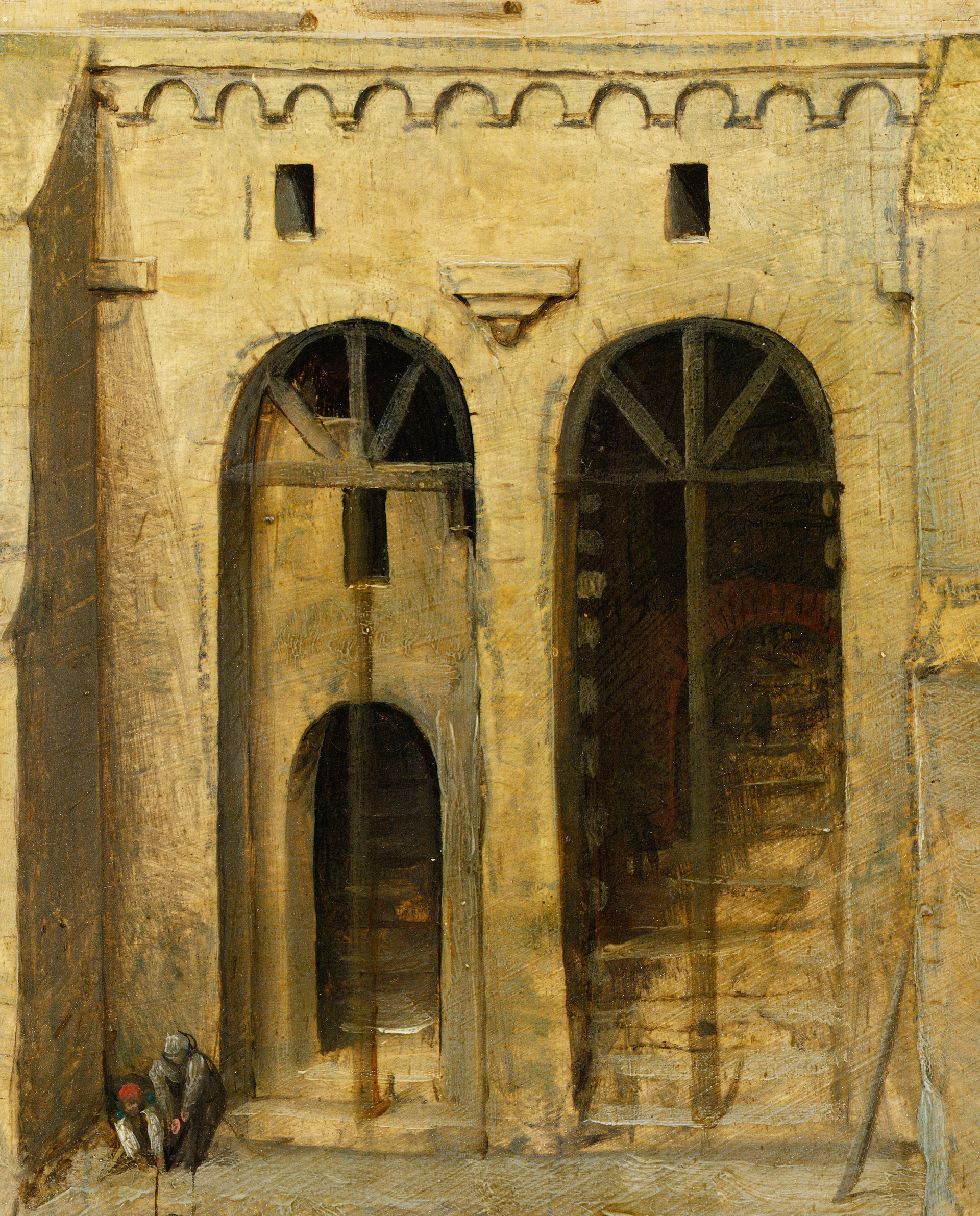
This painted detail is from Pieter Bruegel the Elder’s Babel in Vienna. After the jump, it has been magnified x10 (to give an indication of how small the actual painting is). You can download a high-resolution scan (ten metres across at 72DPI) from here, compliments of the Google Art Project and Wikipedia.
Below are some of the casts from the moulds. There were upwards of 432 panels cast, and casting them was to prove a lot easier than fitting them.
 Colm Lawton
